
Data visualizations from work-in-progress research. Source code available on GitHub or via request.
Gender norms and joint household labor choices
Analysis of the income elasticity and potential bunching effects of the breadwinner norm, documented by Bertrand et al (2015). I study the gap in both labor hours and income between heterosexual married households. Early analysis suggests when household income is no longer a binding constraint, there are significant reductions of female work hours.
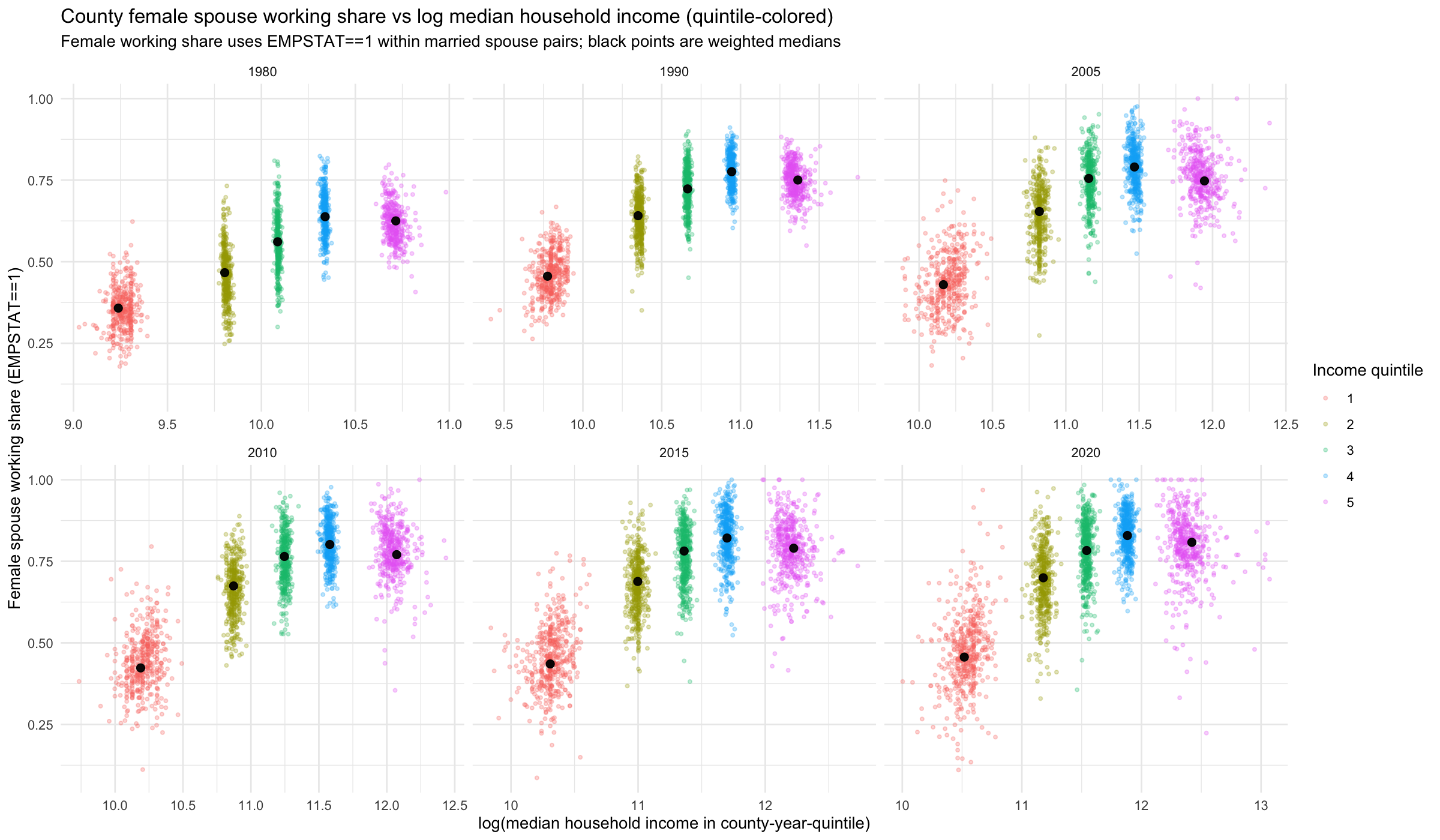
Share of employed female spouses
Share of females in married couple households who work by income quintile over time
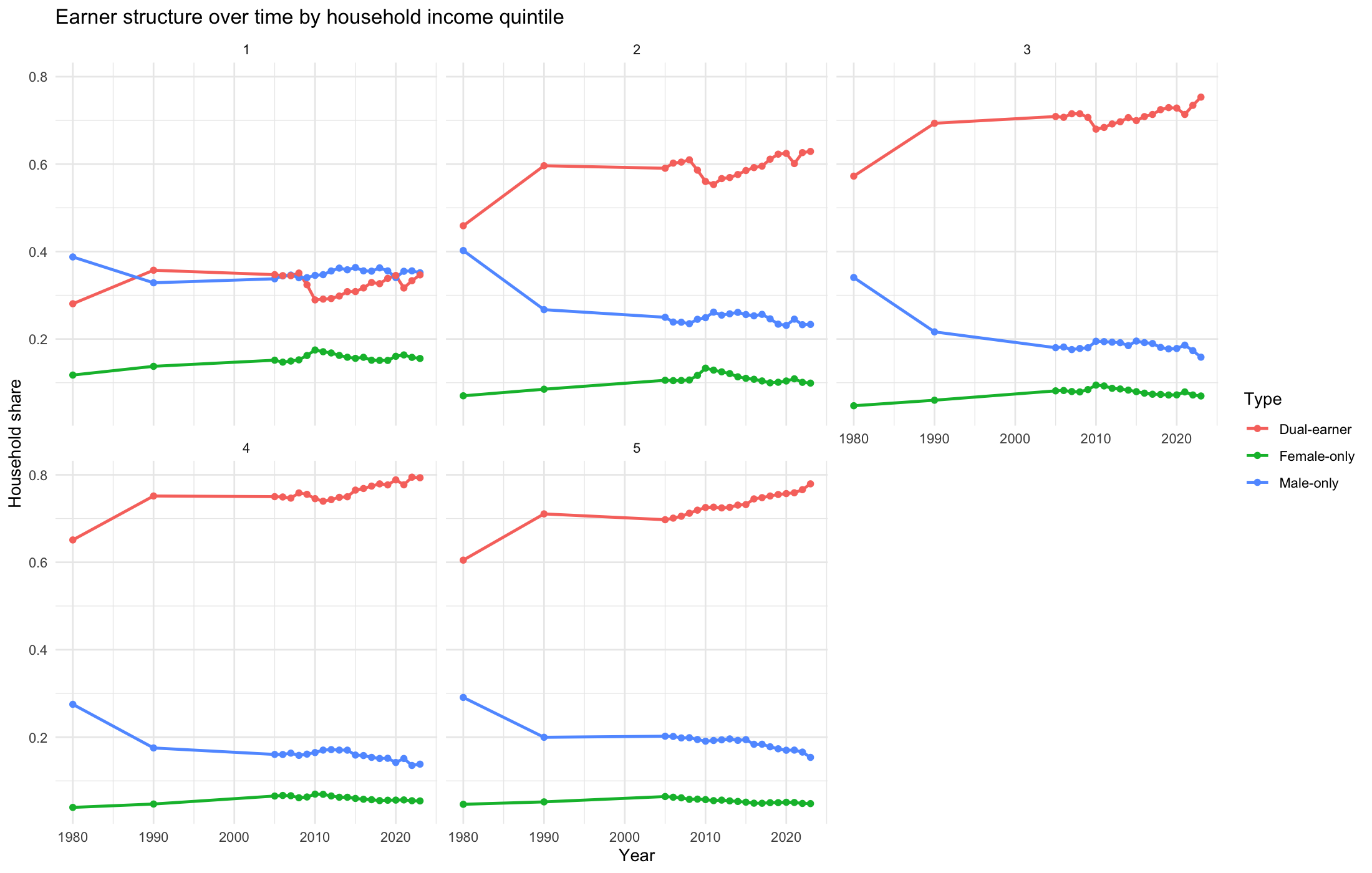
Earnings share by household type
ACS household composition and share of total households by quintile.
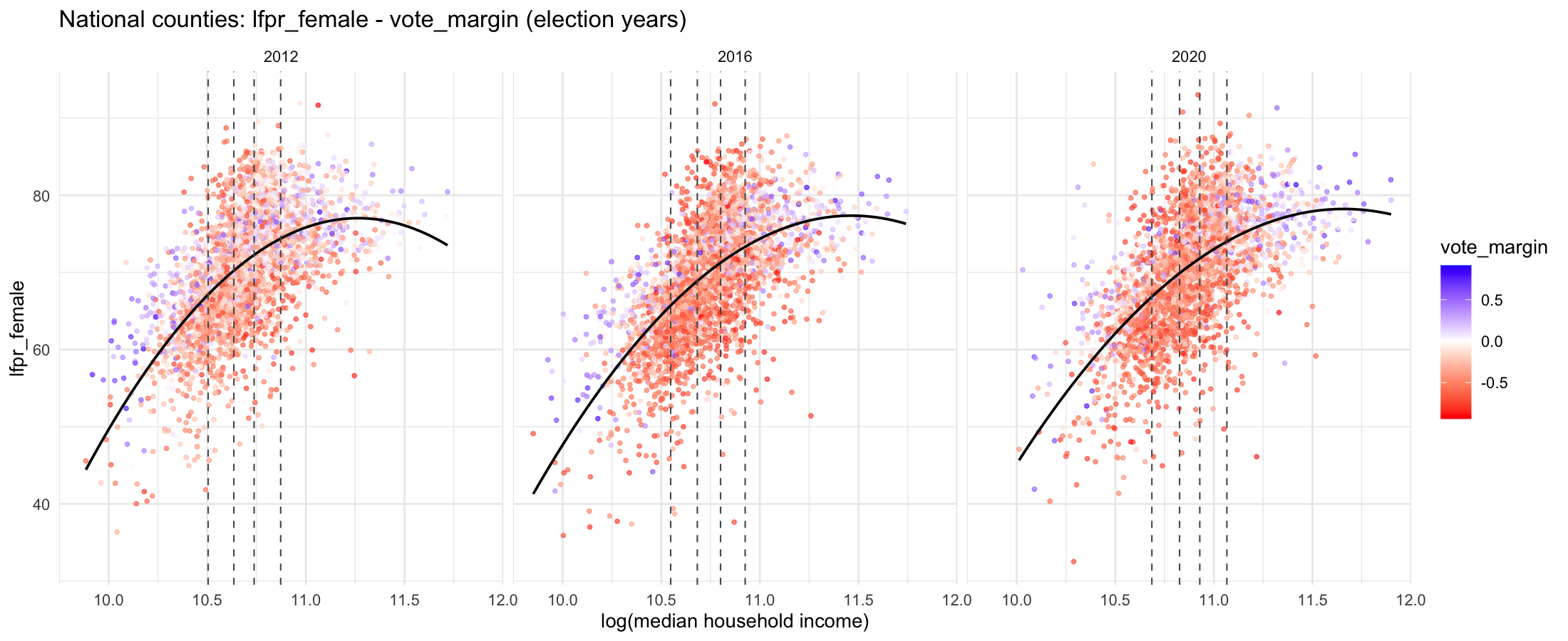
Female labor force participation rate (LFPR)
For previous three presidential years, I plot female LFPR against log(median household income) at the county level.
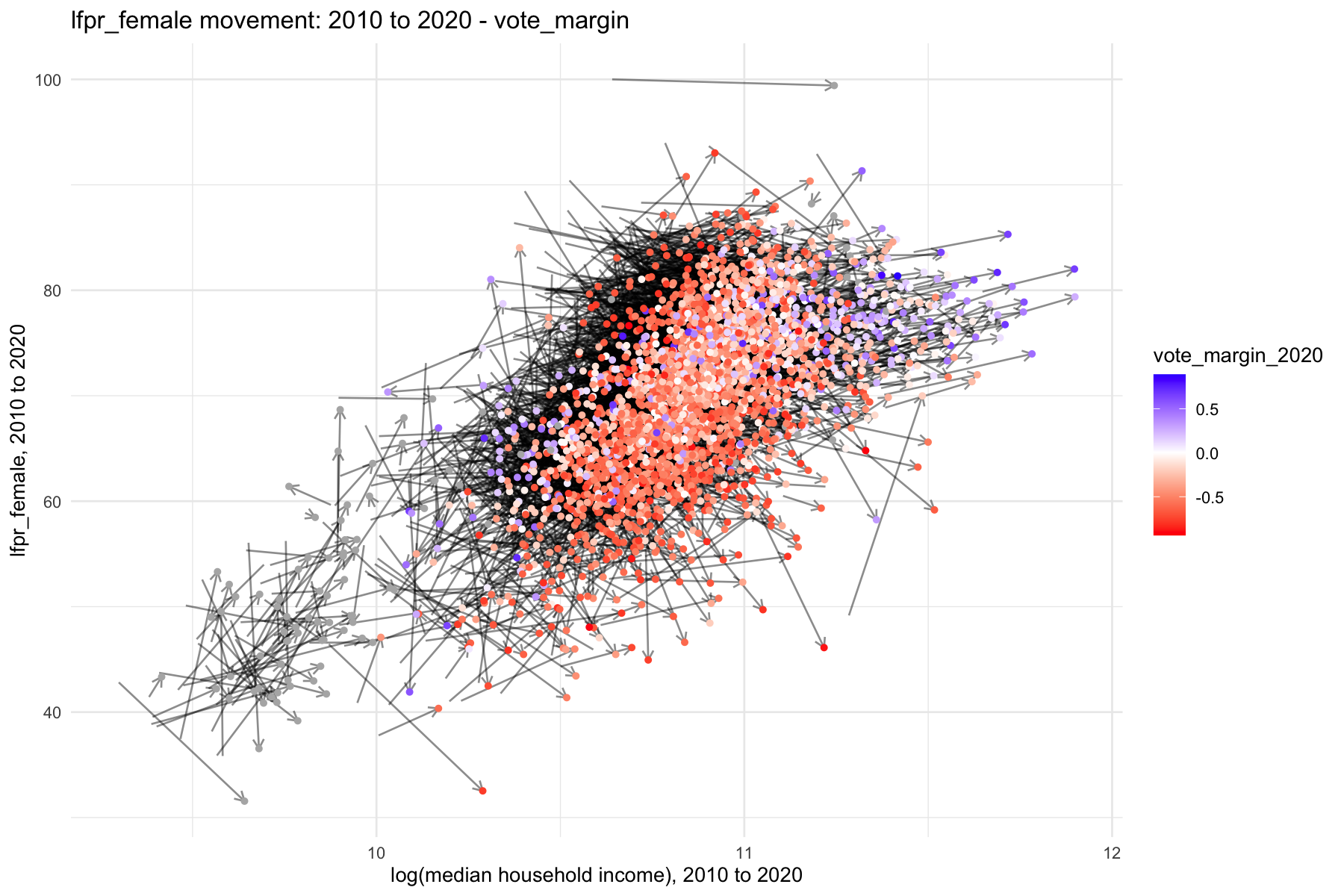
Change in female LFPR (2012-2022)
Change in female labor force participation by log(median household income). Color indicates the vote margin in 2020 presidential election for the county.